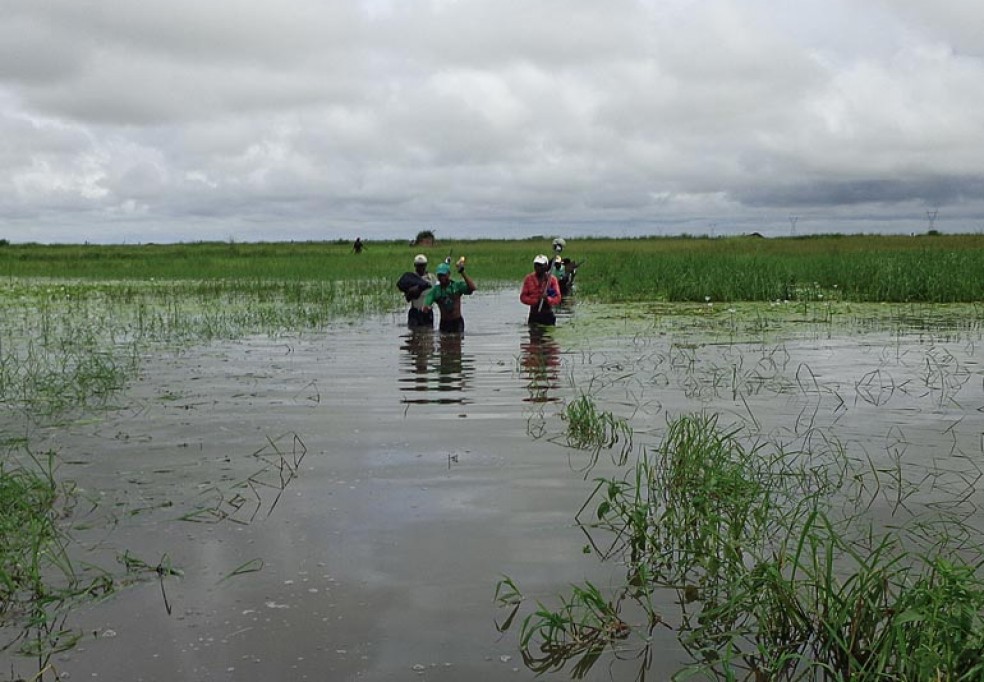
Rural Finance Support Program

Rural Finance Support Program

Client – IFAD
Location – Mozambique
Year – 2003 – 2004
Time – 6 months

The aim of this project was to improve access to financial services in rural areas. Verde Azul was tasked by IFAD to identify several ways to motivate existing and / or new financial institutions to expand in rural areas and innovate. Long-term goals involved improving the ability of low-income groups to manage their income, in order to use credit in times of need, and improving the services offered by existing institutions. The RFSP (Rural Financing Support Program) encourages the financial service provider to work in rural areas by making capital available, which would serve to pay the initial expenses and those related to the launch of new products and services aimed at low income groups. income. Verde Azul prepared working documents, gathered information from financial institutions at provincial and national level. The target groups included the Ministry of Planning and Finance, the Ministry of Rural Development, the Bank of Mozambique, commercial banks, non-financial intermediary banks, microfinance institutions and NGOs.

Maputo Corridor Initiative for Assistance to Secondary and Vocational Training Schools – Initial Study for FDC

Maputo Corridor Initiative for Assistance to Secondary and Vocational Training Schools – Initial Study for FDC

Client – FDC / USAID
Location – Mozambique
Year – 2003 – 2004
Time – 5 months

Verde Azul provided assistance to the Community Development Foundation (FDC) to determine the nature and extent of HIV in secondary schools and vocational schools in the Maputo Corridor.

Data on prevalence, living standards, livelihoods, as well as the needs of target groups were collected.

Verde Azul helped FDC establish baseline measures using empirical results from the baseline study, using participatory and quantitative approaches to collect and share this information with the FDC team.

Verde Azul also developed and trained FDC to use an effective monitoring and evaluation system that allows the identification of “new problems”, for adjustments during implementation, and to keep track of new needs.

Verde Azul proposed a cost-effective solution and provided assistance to FDC during the initial implementation of the monitoring system.

The rationale for the baseline study was as follows:

  • Collect data through participatory and quantitative approaches that allow the design of school-based and school-based interventions;
  • Base interventions on a detailed understanding of individual and environmental factors that affect the sexual knowledge, attitudes and practices (CAP) of 13 20-year-old students in the target schools;
  • Establish possible patterns of variation between CAP intervention and change in the past, and suggest solutions;
  • Make a strategic contribution to decision-making on the possible expansion of interventions to other schools in the Maputo area.

Food Distribution and HIV / AIDS Counseling to Orphans and Vulnerable Children

Food Distribution and HIV / AIDS Counseling to Orphans and Vulnerable Children

Client – World Food Program
Location – Mozambique
Year – 2003 – 2004
Time – 2 months

Verde Azul trained counselors to help vulnerable groups in their respective communities, providing food to 1000 people in Maputo province.

The beneficiaries included were HIV / AIDS patients, orphans and vulnerable children.

In each location, meetings were held with the aim of raising awareness about HIV / AIDS and identifying community leaders who were responsible for helping the less fortunate in their respective communities.

The counselors collaborated with groups from the local community as a measure of “training in the workplace”.

This methodology has been successful in training community leaders to deliver services in response to immediate assistance needs.

Integration of HIV / AIDS in Fishing Associations on the Sofala, Nampula and Zambézia Coast

Integration of HIV / AIDS in Fishing Associations on the Sofala, Nampula and Zambézia Coast

Client – IFAD / PABAS, IDPPE
Location – Nampula, Zambézia and Sofala – Mozambique
Year – 2003
Time – 3 months

The aim of this project was to create solutions to the challenges of HIV / AIDS in the workplace of Fisheries Associations in Sofala Province.

It was designed as an immediate response to the impacts of the HIV / AIDS epidemic. The project was funded by IFAD.

The activities have been implemented at various locations along the coast in the provinces and have been extended to the provinces of Nampula and Zambézia.

During the implementation plan, a distinction was made between two components of integration: Integration and a direct response to HIV / AIDS.

Verde Azul focused on interviews and group meetings to develop a business plan, as well as establish a network of institutional partners. The activities and plans were implemented within each institution in each province, in order to respond to the specific concerns raised during the focus group interviews and meetings.

Verde Azul delivered a proposal for response plans and financing solutions to IFAD.

Study of the Impact of HIV / AIDS in Mozambique’s Customs Zones – Border Posts with South Africa

Study of the Impact of HIV / AIDS in Mozambique’s Customs Zones – Border Posts with South Africa

Client – HDA (Health Development Africa)
Location – Mozambique
Year – 2002 – 2003
Time – 6 months

Verde Azul developed demographic projections and cost estimates of the impacts of HIV on customs officials and at different border posts between Mozambique and South Africa.

Verde Azul proposed responses and estimated costs for each response, according to the activities included the preparation and implementation of a Seminar to determine the viable responses to the challenges of HIV / AIDS.

The project resulted in the adoption of strategies and action plans by each of the customs offices.

The results were subsequently assessed by a separate and independent group, where it was found that “substantial assistance was possible to colleagues suffering from HIV / AIDS through the participation and active involvement of customs officials”.

PROAGRI evaluation

PROAGRI evaluation

Client – T&B Consult
Location – Manica – Mozambique
Year – 2002 – 2003
Time – 5 months

Verde Azul participated in a technical assistance team, financed by a consortium of donors to assess the impact of the implementation of the Agricultural Reform project of the Ministry of Agriculture, PROAGRI at the institutional level, as well as at the producer level, in the province of Manica.

Several aspects, such as the relevance of policies, the efficiency of activities, the effectiveness of results and the sustainability of results, were analyzed, taking into account the objectives that were intended to be achieved by PROAGRI.

The final report was presented through a series of working meetings and resulted in substantial changes within the PROAGRI program.

Strategic Health, Education and Agriculture Plan

Strategic Health, Education and Agriculture Plan

Client – Ministry of Health, Education and Agriculture, Provincial Directors and Irish Aid
Location – Niassa, Nampula, Tete and Inhambane – Mozambique
Year – 1998 – 2003
Time – 18 months

Verde Azul facilitated the development of a strategic implementation plan for the Provincial Governments as one of the tools of a national decentralization plan.

The work involved training and strengthening the work capacities of civil servants in 2 provinces – Inhambane and Niassa.

Capacity building on-the-job training was carried out within the framework of the provincial government structures of the provincial delegation for Agriculture, Health and Education to plan and implement its own strategic development and financial management plans, as well as the evaluation and improvement of community components of Participation.

The objective of this project was to establish a financial management program in accordance with international standards, to train and prepare the employees of the provincial government, in participation, evaluation and monitoring strategies.

Training and capacity building being expanded to the provinces of Nampula and Tete.

During the implementation of the Verde Azul project, a strengthened network between stakeholders was initiated and it was possible to increase the involvement of local communities in the provincial planning process.

Regional Training on the Planning Cycle Project of Coastal Zone Management Authorities

Regional Training on the Planning Cycle Project of Coastal Zone Management Authorities

Client – SEACAM (Secretariat for East Africa Coastal Zone Management), an initiative of the World Bank
Location – Mozambique
Year – 2000 – 2001
Time – 3 months

Verde Azul trained more than 90 government leaders and officials from the institutions responsible for coastal zone management.

It involved the final decision makers from Mozambique, Tanzania, Kenya, Zambia, Angola, Lesotho and South Africa.

This resulted in a number of coherent project design agreements, using a combination of different Planning methodologies.

SEACAM was supported by Verde Azul and helped to develop a manual in coordination with a team of consultants “A good idea for a good project”, available in Portuguese, English and French.

Based on the training experience accumulated during the various workshops, and on input from other Project specialists, a training manual widely used by many institutions was developed, which includes tools for approaching the logical framework and objective Oriented Project Planning methodologies, having been developed through participatory-based project planning.

Assistance to Flood Affected People

Assistance to Flood Affected People

Client – Embassy of Sweden
Location – Mozambique
Year – 2000 – 2001
Time – 8 months

Verde Azul coordinated assistance to the Swedish aid agency AIDS during a transitional period, when the program needed to be expanded to respond to the need for assistance in February 2000.

This involved recommendations on priority programs to be financed and the coordination of ASDI funding to NGOs, United Nations agencies and the Government.

Verde Azul participated in support meetings with the Minister of Interior, informing the ambassador and the director of Swedish aid (Sida) in Mozambique.

Verde Azul participated in coordination meetings with the United Nations and made recommendations to AIDS on how best to assist in assistance after the floods in the districts of Chókwè, Guijá, Chibuto, Xai-Xai, Bilene and Macia.

Verde Azul carried out the monitoring and implementation of immediate support and identification programs for groups that were isolated, in setting up camps and setting up tents, water treatment, construction of latrines, distribution of hygiene and cleaning kits, provision medical health care, clothing distribution and diversified distribution of raw materials for cooking in the districts of Chókwè, Guijá, Chibuto, Xai-Xai, Bilene and Macia.

When the water level declined, Verde Azul recommended specific programs for affected households, so that they could return to their homes and farmland areas, and restore their livelihoods.

The assistance included the preparation of the Terms of Reference, the proposals and the hiring of several NGOs and consultancy groups to implement these restoration programs.

Situational Report on Water Demand Management

Situational Report on Water Demand Management

Client – IUCN Regional Office
Location – Mozambique
Year – 2000 – 2001
Time – 6 months

Verde Azul assisted IUCN to carry out an assessment of all water use, planning and analyzing its impact on the management of water demand, in a current and future way in Mozambique.

Deliverables included: a database for the different water supply and use systems in Mozambique, the identification of bottlenecks in the supply network and proposals for how management can be carried out to improve and administer water all over the country.

Theme: Overlay by Kaira ©2023 Verde Azul Consult, Lda. 🇲🇿 Todos os Direitos Reservados