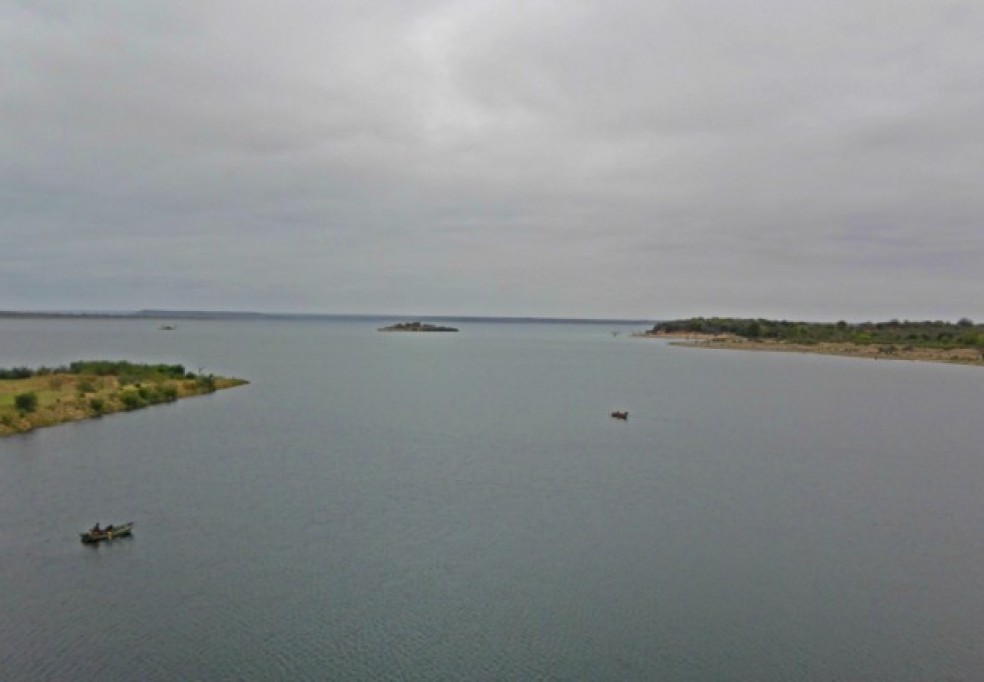
Tourism Development in Chemucane – Maputo Special Reserve

Tourism Development in Chemucane – Maputo Special Reserve

Client – Bell Foundation Trust
Location – Maputo Province – Mozambique
Year – 2011
Time – 4 months

Environmental Impact Study for the “construction of a community Lodge” under a special license issued by the National Conservation Authority (DNAC) for an association called Ahi Zameni Chemucane.

The investment is financed by the Bell Foundation and involves the conservation of an area of about 800 hectares.

Verde Azul was responsible for:

  • Socio-economic data for terrestrial and marine fauna and flora;
  • Preparation of the Environmental Pre-Feasibility report followed by the terms of reference (EPDA and TOR);
  • Environmental impact study and management plan presented to the Bell Foundation for internal discussion;
  • Presentation of EIA (final report) to the Ministry of Environment;
  • Assistance to the Client and the Ministry of the Environment for approval of the environmental license.

Inclusive Economic Growth through the Sustainable Use of Natural Resources in Niassa Province: Malonda Program

Inclusive Economic Growth through the Sustainable Use of Natural Resources in Niassa Province: Malonda Program

Client – Government of Niassa and SIDA
Location – Niassa – Mozambique
Year – 2000 – 2007
Time – 7 years

Verde Azul was instrumental in the development and management of the Malonda Program, a private sector development program in the province of Niassa, Mozambique. The program was funded by the Government of Mozambique and the Swedish Cooperation Agency for International Development.

Verde Azul presented proposals to subsequently establish a sustainable institutional structure for the Malonda Program.

The Malonda Foundation established as essential services in its area of activity: providing support to local communities by increasing the efficiency of companies related to reducing barriers to bureaucracy; risk and transactions established at the Malonda Foundation.

During the management of Verde Azul, five forestry companies were certified by FSC, which started operations in Niassa, in partnership with Malonda. They are currently implementing a planned management to reforest more than 500,000 ha of degraded land. More than 3,000 new direct jobs have been created by 2007. This path is expected to continue in order to reach at least 15,000 new jobs within ten years. From here, the implementation of several companies took place and the railroad was restructured.

A large protected area of 110,000 ha has been created, Monte Mosale, which is important for the protection of ecosystems and the biodiversity of the province.

Responsibilities included: design, execution, coordination, monitoring and planning, regular performance assessment (operational and financial) and reorientation of activities. It also involved identifying investment opportunities in collaboration with the Provincial Government and promoting investments and business negotiations with investors and stakeholders in Forestry, Agriculture, Tourism and Wildlife.

Subsequently, communities were assisted in how to plan the use of their land by external and independent experts, and VA also provided legal support. The communities decided to relinquish some of their rights in favor of implementing commercial establishments in exchange for job creation and infrastructure development.

Verde Azul developed a model for the recognition of collective rights and the communities were brought into direct relations with investors.

The process was implemented with the support of FAO, Fundação Aga Khan, TechnoServe and with independent experts such as Sevy Madureira do Brasil and Christopher Tanner from FAO providing guidance and support throughout the process.

The process for obtaining the right to use the land was implemented in accordance with the Mozambican land law (published in 1997).

Furthermore, it focused on a process of Free and Informed Consent regarding the delimitation of all areas that legally belong to local communities, as well as prioritizing the mapping of areas with high conservation value.

The Malonda strategy focused on respect for indigenous communities and their right to make informed and inclusive decisions. Local communities were encouraged to take charge of the speed and negotiation process in the various debates that led to the creation of the Malonda Foundation.

A Malonda Resource Center was opened in Maputo and a headquarters in Lichinga was created. Once the institutions were legalized and the board of directors held their first meetings, Verde Azul delivered the program to be carried out by the Administration and by an executive director and his team.
Production and Banana in Northern Mozambique: Compensation and Resettlement Plan

Production and Banana in Northern Mozambique: Compensation and Resettlement Plan

Client – ENICA
Location – Cabo-Delgado – Mozambique
Year – 2012
Time – 5 months

Verde Azul assisted a team of Mozambican investors in the banana agro-industry area – Enica, to prepare a Resettlement Plan for the first 1000 hectares planned as their cultivation areas.

The results included the analysis of the socioeconomic profile of the affected families, as well as the preparation of the resettlement plan and the resettlement action plan.

The results were composed by:

  • Mapping of the resettlement area;
  • Assessment of potential adverse and positive impacts on communities in quantitative and qualitative terms;
  • Evaluation and analysis of potential loss of tangible and intangible assets;
  • Definition of the compensation and eligibility criteria for beneficiaries;
  • Presentation of technically and economically viable solutions and alternatives to ensure that the current standard of living of affected families is improved as a result of resettlement.

The work involved data collection through a deep understanding of the infrastructures, improvements, natural resources and those of households affected by the project in Ocua-Chiúre. The presentation of a compensation and resettlement plan for an estimated area of 1,000 ha in the Namravarava community, Ocua locality in the Chiúre district, in the province of Cabo Delgado.

Safe Land Access Project

Safe Land Access Project

Client – Millennium Challenge Account (MCA)
Location – Maputo, Zambézia, Nampula, Cabo Delgado and Niassa – Mozambique
Year – 2009 – 2013
Time – 5 years

The land component of the MCA facilitated improvements in land management systems and land rights records. It reviewed the policies and the corresponding legislation.

Verde Azul in partnership with HTSPE, Lda (UK) provided technical assistance for these activities.

Assistance began in 2009 and was completed in the second half of 2013. The project was particularly focused on the four provinces in the north of the country: Zambézia, Nampula, Niassa and Cabo Delgado.

The results included secure access to land with a focus on the need to produce tangible economic impacts that are shared by the poorest and the least favored social strata in the target provinces.

The current national land policy provides a basis for the whole approach through the following statement: “safeguard the rights of the Mozambican people to their land and natural resources, promoting investment and equitable and sustainable use of these resources”.

Current activities include the establishment of an improved registration system. It is intended to guarantee the various existing rights – concessionaires and formal. It is designed to simultaneously facilitate access to land for investors, who may eventually fall under these same rights.

The program also includes new solutions so that investors and communities can work together and share the results of their efforts, guided at all points by the principles of equality and sustainability.

About 6 separate institutions are involved in this program as beneficiaries and implementers of more than 40 million dollars of development aid: National Directorate of Land and Forests, CENACARTA, CFJJ, INFATEC and Municipalities.

The actions are focused on equal access to a formal registration system, accessible and available to the most needy.

Measures are also needed to strengthen the capacity of the most deprived to use individual and community resources independently or in partnership with the private sector and public partners.

Investor access to land can change the parameters of the local production system and, if well managed, it alters the local livelihood system, offering economic and employment opportunities that can enhance income and improve the social well-being of the most vulnerable communities.

The program presents a vision of transforming cities and districts, where investment brings resources and opportunities for local farmers, it was developed for farmers’ self-subsistence in order to develop alongside investors.

The administration record will be installed simultaneously with training to match the system of resources, capacity and competencies. The entire system is seen as a tool for rural development. It will clarify land rights, while managing the diverse rights and needs. The land component has a clear operational link with the decentralization process and its emphasis on the district as the country’s development hub.

Climate Change in Mozambique: Private Sector Participation for Adaptation and Resilience INGC Phase II, Theme 4

Climate Change in Mozambique: Private Sector Participation for Adaptation and Resilience INGC Phase II, Theme 4

Client – Embassy of Denmark (DANIDA)
Location – Mozambique
Year – 2009 – 2011
Time – 1.5 years

The main objective of this project was to ensure a rapid implementation of adaptation and resilience training, with an emphasis on disaster risk reduction, by involving the private sector in a structured and pragmatic way, so that the process can be replicated in other areas of Mozambique.

A strategic environmental assessment model was developed and implemented to determine the risks and opportunities for adaptation in a large geographical area of approximately 2.4 million hectares.

Verde Azul prepared and presented a model of how the private sector can be involved in building sustained wealth. Anchor projects were identified and meetings with stakeholders and the community were held to create awareness and learn how local communities are dealing with the changes that already affect their livelihoods.

The objective of involving the private sector was to rehabilitate degraded areas, to increase nature’s capacity to withstand extreme climatic conditions and to accelerate the transition from the current self-subsistence economy in the area to a competitive wage economy that can give individuals better living standards. and reduce poverty with permanent solutions for building resilience.

The work also involved the development of strategies that can safeguard important ecosystem services and ensure a better life for future generations.

The developed project was an instrument of strategic planning and measures for adaptation and building resilience in a geographical area of approximately 2.4 million hectares.

A pilot project was created for the production of agro-energy and support for research was provided, which is essential for the production of commercial organic sugar and bio ethanol that can respond to the needs of the local market.

8000 community members were involved in awareness-raising meetings.

A project model based on field experience and basic feedback was presented to INGC.

Agro-Industrial Development of Banana and Mango, in the Province of Manica

Agro-Industrial Development of Banana and Mango, in the Province of Manica

Client – GIESTA
Location – Manica – Mozambique
Year – 2005 – 2007
Time – 2 years

Verde Azul was hired by a group of Mozambican investors to carry out pre-feasibility and feasibility studies, as well as plantation tests for the development of the banana and mango agro-industry for export.

The work involved land identification and legalization of approximately 230 hectares of land, including DUAT for agro-industrial production.

Verde Azul also implemented studies to evaluate the viability of bananas and other fruit production, mobilized a team and supervised the detailed analysis of the soil.

Verde Azul collaborated with the company Chiquita to collect data on precipitation, climate, social and environmental restrictions.

Verde Azul developed mitigation strategies, as well as negotiated with local authorities and communities.

Verde Azul carried out studies on water storage strategies in collaboration with a South African group, Crookes Brothers and initiated the legalization of land use rights for 1000 hectares of land areas for additional crops (DUAT acquisition), as part of its growth strategy.

Behavioral Surveillance Studies on MARP Populations in Angola (Prisoners and Truck Drivers)

Behavioral Surveillance Studies on MARP Populations in Angola (Prisoners and Truck Drivers)

Client – CDC – Angola
Location – Angola
Year – 2011
Time – 8 months

The general objective of this project was to support the Government of Angola to understand the HIV epidemic among the target populations, through a basic survey of behavioral and serological surveillance (BSS) supported by the CDC. These BSS were made with two main populations: long distance truck drivers, and prisoners.

The specific objectives of the study were:

  • Examine attitudes, behaviors and perceptions of risks related to HIV and STDs among truck drivers, as well as among male prisoners and prison officials;
  • Estimate the prevalence of HIV and syphilis in the population studied;
  • Develop the Ministry of Health’s internal capacity to implement subsequent BSS surveys among populations most at risk for HIV;
  • Carry out the results of tuberculosis screening and recommendations for medical assistance to prisoners.

Verde Azul implemented, mobilized and trained field workers and collected data, and verified the quality of the data collected.

In the second phase, Verde Azul analyzed and interpreted the results.

The final report included a proposal and a curriculum outline for a training program for conducting and interpreting BSS research results.

CLUF Lands Community – Strengthening the Provincial Land Authorities (SPGCS) in the Provinces of Tete and Gaza

CLUF Lands Community – Strengthening the Provincial Land Authorities (SPGCS) in the Provinces of Tete and Gaza

Client – CLUF
Location – Tete and Gaza – Mozambique
Year – 2013 – 2014
Time – 1 year

Evaluate the way of delimiting the community lands of execution made by ITC and associates. Under the support of the land administration community in the provinces of Gaza and Tete.

The objective of CLUF is to guarantee the rights and benefits to communities over the use of land and natural resources, with the objective of rural economic development.

The program follows an approach guided by the search for innovative solutions that guarantee the rights of communities to land, and proposes to play a facilitating role in the connection between communities and producer associations with potential investors, such as:

  • Participation in the delimitation of community lands;
  • Identify possible conflicts in the delimitation process;
  • Propose improvements in the data collection and management system;
  • Perform zoning based on information collected in the field and satellite image;
  • Prepare a pre-proposed support for one and other SPGCs for a better discussion with DNTF ITC;
  • Management committees.

Environmental Assessment and Air and Water Monitoring

Environmental Assessment and Air and Water Monitoring

Client – SGS Mozambique
Location – Mozambique
Year – 2009 – 2010
Time – 12 months

Implementation of the environmental impact assessment and environmental management plan to mitigate the impact of the investment and assess the risk of deterioration of air and water in relation to an industrial development in Maputo, Mozambique. The contract was concluded by SGS. Verde Azul carried out an environmental impact assessment and developed an environmental management plan and a monitoring academy for SGS in the first phase.

Agro-Industrial Development for Commercial Banana Production in Sofala and Nampula Provinces

Agro-Industrial Development for Commercial Banana Production in Sofala and Nampula Provinces

Client – CETA
Location – Sofala and Nampula – Mozambique
Year – 2007
Time – 6 months

Verde Azul assisted a group of investors to acquire the land use right document, from areas of cultivated land for the production of agro industrial bananas for export in the provinces of Sofala and Nampula.

Verde Azul implemented preliminary studies to assess the viability of banana production in terms of yield performance.

This involved the mobilization and coordination of soil studies, contacts with provincial and local authorities (SPGC and Economic Activities) and an environmental assessment of tracking and analyzing soil suitability and climatic conditions, as well as testing a number of varieties and of various planting technologies.

Theme: Overlay by Kaira ©2023 Verde Azul Consult, Lda. 🇲🇿 Todos os Direitos Reservados